Existing Patients
(781) 843-0881
New Patients
(781) 218-9133


Dental anxiety is common — studies estimate that tens of millions of Americans experience some level of fear or unease around dental visits. If you avoid the dentist because of nerves, Drift Dental Design offers a range of carefully supervised sedation options designed to help patients feel calm and safe during treatment. Our goal is to remove barriers to care so you can keep your oral health on track without dread.
Avoiding dental appointments because of anxiety can allow small problems to become larger ones over time. Sedation dentistry is a practical, clinically proven way to reduce fear, increase comfort, and make it possible to complete necessary care in fewer visits when appropriate. By combining modern sedation techniques with attentive monitoring and local anesthesia, we help patients get the treatment they need with as little stress as possible.
We tailor every sedation plan to an individual’s health background, the complexity of the procedure, and their personal comfort preferences. Throughout your visit, our team explains what to expect, answers questions, and maintains close observation so patients — and their families — feel confident and reassured before, during, and after care.
Sedation dentistry is not a single treatment but a set of methods that reduce anxiety, suppress a sensitive gag reflex, and help patients tolerate longer procedures without discomfort. Depending on the option chosen, sedation can range from light relaxation with quick recovery to deeper sedation where the patient’s memory of the procedure is limited. Even with sedation, local anesthetic is used when needed so that treatment is pain-free.
Beyond relieving fear, sedation can make complex or extended appointments more efficient. Patients who struggle to sit for long periods, have strong gag responses, or become tense during dental work often find that sedation transforms the experience — what might have been multiple short visits can sometimes be completed in a single, more comfortable appointment when clinically appropriate.
Importantly, sedation is always provided within a framework of safety. We review your medical history, current medications, and any underlying conditions to determine whether sedation is appropriate and which method best balances comfort with safe, effective treatment.

People seek sedation for many reasons beyond general anxiety. For some, a single traumatic dental experience in the past can make routine care stressful; for others, medical or physical conditions make it difficult to tolerate standard treatment. Sedation provides an alternative that accommodates each patient’s needs while allowing clinicians to perform the work required.
Dental phobia — When fear prevents regular checkups or necessary dental work, sedation can be the key to starting and maintaining a treatment plan.
Procedure-specific anxiety — Some treatments, such as extractions or restorative work, can provoke significant worry even in patients who otherwise tolerate routine cleanings. Sedation eases anticipatory stress so patients remain comfortable.
Extensive appointments — For cases that require long chair time or multiple procedures in one visit, sedation helps patients remain relaxed and makes the experience more manageable.
Strong gag reflex — Sedation can significantly reduce gagging, enabling the dental team to work efficiently and safely while the patient stays comfortable.
Sensitivity to stimuli — Patients with hypersensitive teeth, sensitive gums, or a low tolerance for dental sounds and sensations often benefit from sedation to reduce discomfort and anxiety.
Difficulty sitting still — Young children, patients with certain disabilities, or individuals with cognitive or medical conditions may need sedation so the dental team can deliver appropriate, timely care.
Choosing a sedation method begins with a careful review of your health history, medications, and the planned dental treatment. We discuss the goals of sedation — whether you need light calming, suppression of gagging, or deeper relaxation for a complex procedure — and recommend an approach that prioritizes safety and predictable recovery.
It’s important to distinguish between conscious sedation, which preserves responsiveness to verbal cues and maintains independent breathing, and general anesthesia, which induces a deeper state of unconsciousness and is typically provided in a hospital setting by an anesthesiologist. For most dental procedures performed in-office, conscious sedation provides the right balance of comfort and safety.
Conscious sedation lowers anxiety and reduces awareness while allowing patients to respond to commands and breathe on their own. Monitoring during these cases tracks vital signs to ensure stability throughout treatment. General anesthesia, by contrast, is reserved for situations where other forms of sedation are insufficient and is administered in a controlled hospital environment with full anesthesia support.
When conscious sedation is appropriate, we offer several commonly used methods. Each has advantages depending on the patient’s comfort needs and the duration or complexity of the procedure. We’ll explain the differences and help you choose the most suitable option.
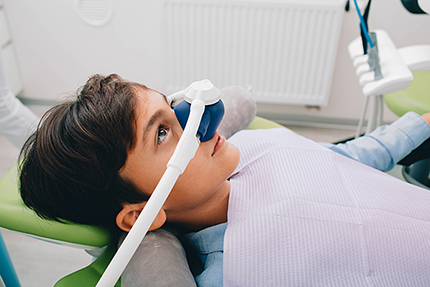
Nitrous oxide, often called “laughing gas,” is delivered through a small nasal mask and produces gentle, short-acting relaxation. Its effects fade quickly once the gas is turned off, allowing many patients to resume normal activities soon after treatment. It’s a reliable choice for mild to moderate anxiety and for patients who want a fast recovery.
Oral sedation involves taking a prescribed medication before the appointment. It creates a stronger level of relaxation than nitrous oxide but allows patients to remain responsive. For safety, anyone taking oral sedatives should plan for a companion to drive them home after the visit and to stay with them until fully alert.
IV sedation is administered directly into a vein and can be titrated to achieve deeper levels of relaxation as needed for more involved procedures. It acts quickly and is carefully monitored throughout the appointment. Patients receiving IV sedation receive specific pre-appointment instructions and must have someone available to escort them home.
Proper preparation supports both safety and an effective recovery. Before your visit, we ask you to share a complete medical history, a list of current medications and supplements, and any past reactions to anesthesia or sedatives. This information helps the dental team select the safest sedation plan and avoid drug interactions or complications.
Certain sedative methods require specific instructions — for example, patients scheduled for IV sedation will receive guidance about fasting beforehand. We’ll also review arrival times, the need for an escort, and any temporary activity restrictions after the procedure. Clear communication helps ensure that your appointment goes smoothly.
Bring questions to your consultation so you understand how the sedative will feel, how long recovery is likely to take, and what symptoms are normal versus those that would require follow-up care. We encourage caregivers to attend consultations for patients who need support during recovery.
Safety is the central concern when delivering sedation. During any sedated procedure, we continuously monitor oxygen levels, heart rate, and blood pressure so that adjustments can be made immediately if needed. Our clinicians are trained in advanced life-support techniques and follow established protocols to maintain patient safety at every step.
After treatment, recovery times vary by the type and depth of sedation. Nitrous oxide patients typically recover quickly, while those who received oral or IV sedatives may require a longer observation period and a responsible adult to escort them home. We provide clear discharge instructions and recommend a short rest period at home before resuming normal activities.
If you have questions about sedation safety, potential side effects, or suitability given your health history, our team at Drift Dental Design will review those concerns with you in plain language and help you make an informed choice that supports both comfort and clinical success.
In summary, sedation dentistry makes dental care more accessible for patients who experience anxiety, sensitivity, or difficulty sitting through procedures. By combining tailored sedation strategies with careful monitoring and personalized preparation, we aim to make your visit safe, comfortable, and efficient. Contact us to learn more about which sedation option might be right for you and to schedule a consultation with our team.
Sedation dentistry offers patients with general anxiety or fears about a dental procedure the opportunity to have a more comfortable and stress-free experience. By utilizing safe and controlled sedation techniques, the patient is eased into a state of complete relaxation before the procedure. This approach eliminates discomfort, pain, and preoperative anxiety, and typically makes patients feel more at ease post-operatively, as they have little or no memory of the actual moment-to-moment procedure.
Local anesthesia involves an injection directly into or close to the area where a procedure is being performed. While it eliminates any sensation of pain in the targeted area, it does not affect your state of mind or level of anxiety. When a patient receives sedation, additional medications to ease anxiety and promote relaxation are employed in advance of local anesthesia. In this way, both the stress and discomfort associated with a procedure are eliminated. Sedation can be administered in a variety of forms based upon patient needs and the recommendations of the dentist or dental anesthesiologist.
Choosing the most appropriate method of sedation for a procedure depends on a variety of factors such as a patient's medical history and their level of anxiety. Dental sedation can come in the form of nitrous oxide sedation, oral conscious sedation, and IV sedation. Certain patients receiving comprehensive treatment or undergoing a complex surgical procedure may require general anesthesia in a hospital setting.
Nitrous oxide, or "laughing gas," is a mild sedative, which is inhaled through a small mask over the nose. A standard in dental sedation for decades, the effects of nitrous oxide are almost immediate and wear off quickly once your procedure is completed.
Oral sedation involves the prescription of an oral medication prior to your appointment. Taken at the recommended time before your visit, oral sedation allows you to feel fully relaxed by the time you're ready for your procedure. With oral sedation, it's necessary to plan on having an escort to and from your dentist's office.
IV Sedation is administered intravenously, or directly into a vein. It is typically indicated when a deeper state of sedation is required. Your dentist will provide you with specific instructions before your visit, and require that you have an escort for the trip home from your appointment.
Sedation dentistry refers to a range of clinically supervised techniques designed to reduce anxiety and enhance comfort during dental treatment. These methods can make routine and more complex procedures easier for patients who experience fear, sensitivity, or difficulty tolerating long appointments. Sedation is used alongside local anesthesia when needed so that the procedure is both comfortable and pain-free.
By reducing stress and physical tension, sedation dentistry can help patients complete necessary care that they might otherwise avoid, improving oral health and preventing minor problems from becoming more serious. Your care team explains each option, monitors you closely during treatment, and reviews recovery expectations so you feel informed and safe throughout the process.
Good candidates include patients who experience dental anxiety, have a strong gag reflex, need lengthy or complex procedures, or have difficulty sitting still due to medical or cognitive conditions. A thorough review of medical history, current medications, and prior reactions to sedation or anesthesia helps determine whether sedation is appropriate. Patients with certain medical conditions may still be candidates but require special planning and coordination with their medical providers.
Children, older adults, and patients with special needs are evaluated on a case-by-case basis so the team can match the sedation plan to individual health factors and procedural requirements. The goal is to balance comfort with safety, choosing the least invasive method that achieves predictable results.
Common in‑office options include inhalation sedation with nitrous oxide, oral sedatives taken before an appointment, and intravenous (IV) sedation administered during treatment. Nitrous oxide provides mild, short‑acting relaxation and clears quickly after the gas is stopped, while oral medications offer a deeper calming effect with a longer recovery period. IV sedation acts rapidly, can be adjusted throughout the procedure, and is used for deeper conscious sedation when clinically indicated.
Each method differs in onset, depth of sedation, and recovery time, so the dental team recommends the option that best fits the procedure and the patient’s health profile. Regardless of the technique chosen, continuous monitoring and appropriate recovery instructions are standard parts of care.
Determining the proper sedation level starts with a comprehensive consultation that reviews your medical history, medications, allergies, and the specifics of the planned treatment. The clinician discusses goals — for example, light relaxation versus deeper sedation for extended procedures — and evaluates whether conscious sedation is sufficient or if referral for hospital‑based general anesthesia is necessary. Safety considerations, such as breathing and airway management, guide the final decision.
Conscious sedation allows patients to respond to verbal cues and maintain independent breathing, while general anesthesia produces a deeper unconscious state and is typically provided in a hospital setting by an anesthesiologist. The practice prioritizes approaches that provide comfort without compromising safety and explains the rationale for the recommended level of sedation.
Preparation varies by the type of sedation. Patients scheduled for IV or stronger oral sedatives will receive instructions about fasting, medication adjustments, and arrival times, while nitrous oxide often requires minimal preparation. Always bring a list of current medications and supplements, and disclose any recent illnesses or changes in health.
Because recovery can impair coordination and alertness, patients who receive oral or IV sedatives should arrange for a responsible adult to drive them home and stay with them until they are fully alert. The dental team reviews all pre‑appointment instructions and answers questions so you know what to expect before arriving.
Safety is central to sedation care and begins with a detailed pre‑treatment assessment and appropriate patient selection. During sedated procedures the clinical team continuously monitors oxygen levels, heart rate, blood pressure, and respiratory status using established monitoring equipment. Staff are trained in advanced life support and follow clear emergency protocols to address unexpected events promptly.
Equipment and medication checks, careful dosing, and post‑procedure observation are standard practices to ensure stable recovery before discharge. Open communication between the patient and team about health history and medication use further minimizes risk and helps tailor safe monitoring for each visit.
Side effects vary by sedation type but commonly include temporary drowsiness, lightheadedness, dry mouth, or mild nausea after oral or IV sedatives. Nitrous oxide typically causes few aftereffects and clears quickly once the gas is stopped, allowing many patients to recover rapidly. Oral and IV agents may require a longer observation period and rest at home for several hours after the appointment.
Your dental team provides specific post‑sedation instructions, including activity restrictions, guidance on eating and drinking, and signs that would warrant follow‑up care. If recovery seems unusually slow or if you experience persistent symptoms, contacting the practice or your medical provider is recommended to ensure safe recovery.
Yes. Sedation can significantly reduce gagging and lower sensitivity to sights, sounds, and sensations that some patients find distressing. By producing relaxation and reducing the reflexive response, sedation enables the dental team to work more efficiently and safely while the patient remains comfortable. This can be particularly helpful for impressions, restorative procedures, and other treatments that typically trigger gagging.
For patients with sensory processing differences or high anxiety about stimuli, sedation paired with clear communication and a calm environment often improves tolerability and treatment outcomes. The team assesses each case to choose a method that minimizes discomfort while maintaining the necessary level of responsiveness and safety.
Sedation can be an effective option for children and patients with special needs when used with appropriate safeguards and careful planning. The dental team considers age, medical conditions, behavioral factors, and the complexity of treatment before recommending sedation and follows pediatric or special‑care guidelines to ensure safety. In many cases, minimal sedation or nitrous oxide is preferred for younger patients due to its rapid recovery and adjustable effects.
Caregivers are encouraged to attend consultations and participate in planning so they understand pre‑appointment instructions, recovery expectations, and at‑home care. Where deeper sedation is necessary, coordination with medical specialists or hospital‑based anesthesia may be recommended to provide the appropriate level of support.
During a consultation the clinician reviews your medical history, current medications, allergies, prior anesthesia experiences, and the intended dental procedures. The team explains the sedation options that are appropriate for your situation, details monitoring and recovery expectations, and answers questions so you can make an informed choice. This conversation also covers any necessary pre‑appointment instructions and whether an escort is required for post‑procedure care.
Consultations are individualized and designed to prioritize safety and comfort, and they often include a discussion of how sedation fits into your overall treatment plan. If you visit the Braintree, MA office you can expect a clear, step‑by‑step explanation of the proposed approach and the next steps for scheduling and preparation with the office of Drift Dental Design.

