Existing Patients
(781) 843-0881
New Patients
(781) 218-9133

At Drift Dental Design, we believe the best defense for a lasting, confident smile is vigilance: regular oral exams paired with thoughtful preventive care. Periodic checkups allow our team to track changes in your mouth, catch issues early, and tailor a plan that fits your needs and lifestyle. We combine clinical expertise with clear explanations so patients leave appointments informed and empowered to protect their oral health.
The first comprehensive exam establishes a baseline. We'll begin by reviewing your medical and dental history to understand any conditions, medications, or habits that could affect your oral health. This conversation helps us identify risk factors—everything from dry mouth to a history of tooth clenching—that influence how we evaluate and monitor your mouth.
Next comes a focused clinical evaluation. During this exam we inspect teeth, gums, tongue, and the soft tissues of the mouth, and we assess jaw function and bite alignment. Where appropriate, we also perform an oral cancer screening and a periodontal assessment to check for early signs of disease. If needed, diagnostic images will be taken to reveal what a visual exam cannot.
Before you leave, the team will review findings in plain language and outline any recommended next steps. That may range from a targeted cleaning and homecare tips to monitoring a minor concern. Our goal is to create a transparent plan that prioritizes prevention and keeps you comfortable throughout the process.

Your mouth is more than the sum of its parts; it’s a mirror that can reflect broader health trends. During an exam we look for signs that may indicate systemic concerns—such as unusual oral lesions, persistent inflammation, or dry mouth—that can relate to conditions like diabetes, autoimmune disorders, or nutritional deficiencies. Identifying these signals early helps patients seek appropriate medical evaluation alongside dental care.
Research continues to strengthen the links between oral inflammation and systemic health. Chronic gum disease, for example, can contribute to inflammatory burden in the body. While causation remains complex, routinely checking gum health and addressing inflammation is a practical step toward reducing potential risks and improving overall well-being.
Oral exams also give us an opportunity to discuss how lifestyle and medications influence oral health. From the effects of certain medications on saliva production to how dietary choices impact enamel, the exam is a chance to make evidence-based recommendations that protect both oral and systemic health.
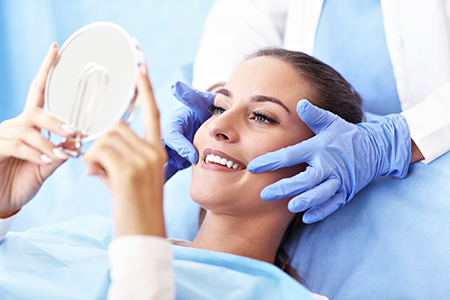
Good daily hygiene is essential, but professional cleanings remove plaque and calculus from areas that are difficult to reach with a toothbrush and floss alone. These cleanings slow or halt the progression of gum disease and reduce the bacterial load that contributes to cavities and inflammation. Routine visits also help us track small changes before they develop into more complex problems.
During preventive visits, hygienists provide personalized instruction tailored to your mouth. Whether that means demonstrating an improved flossing technique, recommending an interdental tool, or advising on products to manage sensitivity or dry mouth, these practical adjustments can have a big long-term impact.
For many patients, we recommend periodic exams and cleanings on a schedule based on individual needs rather than a one-size-fits-all timetable. Factors such as past periodontal history, risk of decay, and systemic health guide how often we suggest follow-ups. The aim is to maintain stability and catch problems when they are simplest to treat.
A careful visual exam is indispensable, but x-rays provide the deeper view. Radiographs let us see the roots of teeth, the bone that supports them, and the spaces between teeth where decay often begins. They are essential for diagnosing issues that aren’t visible to the naked eye, such as early cavities, bone loss from periodontal disease, or problems under existing restorations.
Modern digital radiography allows us to capture detailed images quickly and with minimal exposure. These images integrate with your records so we can compare studies over time and share findings visually during your appointment. The added clarity helps us recommend the least invasive, most effective next steps when treatment is necessary.
In some cases, three-dimensional imaging like cone-beam computed tomography (CBCT) is appropriate for complex diagnostic needs or treatment planning. CBCT offers a volumetric view of the jaws and surrounding anatomy, which can be especially helpful for evaluating impacted teeth, planning surgery, or assessing the jawbone for advanced restorative work.
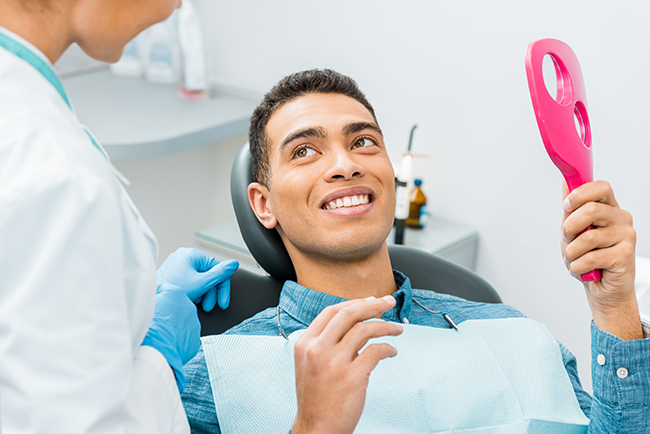
Different types of radiographs serve different clinical goals. Bitewings are small images useful for spotting decay between teeth and monitoring restorations. Periapical films capture an entire tooth from crown to root and are valuable when assessing root health or diagnosing localized problems.
A full-mouth series combines several periapical and bitewing images to document the condition of all teeth and supporting structures. Panoramic films (panorex) provide a broad two-dimensional overview of the jaws, useful for evaluating growth patterns, eruption, and overall bone contours. Each imaging option offers its own perspective and is chosen to answer specific diagnostic questions.
When advanced, three-dimensional CBCT scans are needed, they are selected with a clear clinical indication—such as implant planning or complex surgical assessment. Whatever the modality, we balance the diagnostic benefit with patient comfort and safety, using modern techniques that minimize exposure while maximizing useful clinical information.
An oral exam is more than a checklist; it’s a collaborative moment between you and your dental team to set priorities and reduce future risk. At Drift Dental Design, we emphasize clear communication so every patient understands their current oral health status and the practical steps that support a healthy mouth for years to come.
If you’d like to learn more about what happens during an oral exam or to schedule a preventive visit, please contact us for more information. We’re here to help you maintain a healthy, comfortable, and confident smile.
Yes. We always welcome new patients and their families for care. Feel free to give us a call or reach out to us online to schedule a first visit or for any additional information on our office. We look forward to hearing from you!
Routine dental checkups and professional cleanings help ensure your smile remains in tip-top condition and that any developing problems receive the prompt care they require. While it's a good idea to schedule a checkup and cleaning twice a year, longer or shorter intervals between routine visits depend on your specific needs.
We understand that life gets complicated and busy, and for various reasons, you haven't been able to get to the dentist for care. Don't worry; it's always a good time to get back in touch with the health of your smile.
At Drift Dental Design, we offer skilled and compassionate care to address a wide range of dental needs. Whether you need a simple checkup and cleaning, restorations, periodontal treatment, root canal therapy, or the replacement of missing teeth to get your smile back into shape, we provide precise, gentle, stress-free treatment to give you a smile that is as beautiful as it is healthy.
Give us a call today; we're happy to address all your questions and concerns about getting your smile back in tip-top condition.
For pregnant women, practicing good oral care and seeing the dentist to maintain a healthy smile is considered an important component of prenatal care. Researchers have found that pregnancy not only increases the risk of oral health problems, but these problems may also lead to pregnancy complications. At the office of Drift Dental Design, we provide the skilled and compassionate care required to help expectant mothers keep their teeth and gums in tip-top condition. While certain procedures are not recommended during pregnancy, we provide the necessary care and take all the necessary precautions required.
Thanks to advances in modern dentistry, teeth that have been affected by a range of imperfections or that have sustained damage from trauma or dental decay can be restored to produce a naturally beautiful looking and functional smile.
As skilled and experienced providers of care, our office can effectively improve and enhance the appearance of teeth that are stained, discolored, misshapen, chipped, fractured, gapped, crowded, or broken down due to dental decay. At the office of Drift Dental Design, we offer a comprehensive selection of the leading-edge cosmetic solutions from teeth whitening procedures, dental bonding, tooth-colored fillings, and veneers, to prosthetic solutions and dental implants to rebuild complete and beautiful smiles.
Contact our office to learn more about the many ways we can help you create the smile you've always wanted.
If you're visiting Drift Dental Design for the first time, it is helpful that you contact your former dental office and have your records sent over to us. Make note of any problems you may have so that you can discuss them with your dentist.
To provide efficient service, we ask you to please bring your insurance card, an ID, plus any referral slips or diagnostic records given to you by another office. If you are taking medications, please note or make a list of what they are as you will need to provide that information.
Yes! We assure you that both you and your family will be in good hands at the office of Drift Dental Design.
We do our best to make sure every patient who steps into our office for care is put at ease. We provide precise and gentle care and our skilled, compassionate team strives to make every visit stress-free. You can rest assured that your smile is in the best of hands and that we are doing all we can to ensure your comfort throughout every procedure. While we always take the time to explain every step in care, feel free to ask us any questions about local anesthesia and methods of dental sedation.
At the office of Drift Dental Design, we strive to provide the highest quality of care to address all your dental needs. Once we've had the opportunity to examine your smile, we can give you a clear picture of any dental issues that are present, along with a quote for what the cost of treatment will be. The cost of care all depends upon the extent and complexity of issues affecting the health or appearance of your smile and the types of procedures that are required. Our goal is to make dental care more affordable so that you can begin treatment without any additional stress or delay.
Keep in mind that with routine dental checkups and periodic care, we can help prevent dental disease while treating emerging problems early in their onset to avoid larger issues and more expensive care down the road.
Routine dental checkups and preventive care procedures may be covered under your dental insurance plan requiring little to no out-of-pocket expense. We invite you to check our financial information page or give us a call to find out if our office participates with your plan, and if you have any other questions about dental insurance, dental savings plans, forms of payment, or financing options. We welcome your inquiries and do our best to help you begin care without additional stress or delay.
If you've lost a tooth due to injury, decay, gum disease, or any other reason, we recommend dental implants to replace missing teeth. Dental implants come the closest to replicating the look, feel, and function of your natural teeth.
Absolutely! Both flossing and brushing regularly are equally important to maintain your oral health. While brushing cleans the surface of your teeth, flossing cleans in between them. Flossing is important to prevent plaque buildup, which can cause gums to recede and lead to periodontal disease.
Even if you have dentures, it is still necessary to see a dentist! Dental checkups help ensure that your dentures are comfortable, fitting properly, and that there are no other problems. Beyond assessing your dentures, our dentist will also perform a thorough examination of the jawbone, and surrounding soft tissues both inside the mouth, the face, and neck, to confirm that you remain in good oral health.
Emergency dental care is a service we hope you'll never need- but if you do, the office of Drift Dental Design is here for you!
Whether you're suffering from a chipped tooth, toothache, or any problem affecting your oral health, you can be sure to get the prompt attention and compassionate care you require at our office. Patient care and comfort are our top priorities, and we offer a comprehensive range of the most advanced services to address a broad spectrum of dental needs.
While the pain of a toothache is one of the more common reasons that patients come to our office for emergency dental care, we also promptly treat emergencies that are not necessarily painful like crowns that have been dislodged and broken dentures that leave embarrassing gaps in one's smile.
You can rest assured that your oral health is in the best of hands at our office. We'll quickly determine exactly what's wrong, explain your treatment options, and then provide the precise and gentle care you require to alleviate your discomfort and get you back on the path to oral health and wellness.
Your health and comfort are our top priorities. If your dental emergency is painful, if it affects the appearance of your smile, or if you suspect that an infection is present, our office will make every effort to see you as soon as possible for care.
At the office of Drift Dental Design, we welcome patients of all ages for care and offer a comprehensive range of services designed to help every member of your family maintain a beautiful and healthy smile. Whether you or a loved one needs a routine checkup and cleaning, fillings, same-day crowns, a cosmetic smile makeover, the replacement of missing teeth or require the services of a skilled and compassionate emergency dentist, you can rely on our office for the highest quality care.
For more information on our office and the many services we provide, or to schedule an appointment for care, give us a call today.
An oral exam is a thorough clinical evaluation of your teeth, gums, tongue and the soft tissues of the mouth performed by a dental professional. The exam often includes a review of your medical and dental history, an inspection of bite and jaw function, and screenings for conditions such as gum disease and oral cancer. Together these steps establish a baseline of your oral health and help the team identify changes that deserve attention.
Regular oral exams are important because they catch problems early, when treatment is simpler and outcomes are better. Routine evaluations also allow the clinician to tailor preventive care and homecare advice to your specific needs. By taking a proactive approach to monitoring, you reduce the risk of more complex procedures later on and support long-term oral stability.
Your first comprehensive exam typically begins with a conversation about your medical history, current medications and any symptoms you may be experiencing. The clinician will then perform a focused examination of your teeth, gums, tongue and other soft tissues, check bite and jaw movement, and complete an oral cancer screening and periodontal assessment when indicated. If needed, diagnostic images will be taken to reveal issues that are not visible during the visual exam.
Before you leave, the dental team will explain their findings in clear language and recommend next steps that match your goals and risk profile. Recommendations may range from routine hygiene and improved homecare to closer monitoring or additional diagnostic tests. The aim is to leave you well informed and confident about the plan moving forward.
The ideal frequency of oral exams varies by individual risk factors rather than a one-size-fits-all timetable. Patients with healthy gums, low decay risk and good homecare may be fine with periodic six- to twelve-month visits, while those with a history of periodontal disease, recurrent cavities, or systemic health concerns may need more frequent monitoring. Your dental team will recommend a schedule based on past dental history, medication use, lifestyle factors and clinical findings.
Adhering to the recommended schedule helps the team detect small changes early and maintain long-term stability. If your risk profile changes—for example, after certain medical treatments or new medications—your visit frequency may be adjusted to reflect that. Ongoing communication ensures the plan stays aligned with your current needs.
Yes, an oral cancer screening is commonly included as part of a comprehensive oral exam when clinically appropriate. The screening involves a careful inspection of the lips, tongue, floor of mouth, cheeks and throat for any unusual lesions, persistent sores or abnormal tissue changes. Early detection is critical because many oral cancers are more treatable when found at an early stage.
If the dentist identifies anything suspicious, they will explain the findings and recommend a clear plan, which may include more frequent monitoring, photographic documentation, referral for biopsy or collaboration with a medical specialist. The goal is to provide timely guidance while minimizing unnecessary alarm.
An oral exam can reveal signs that reflect broader health issues, because the mouth often mirrors systemic conditions such as diabetes, autoimmune disorders and nutritional deficiencies. During the exam we look for persistent inflammation, unusual oral lesions or changes in saliva that can signal an underlying medical concern. Noting these signs early can prompt appropriate medical evaluation in collaboration with your primary care provider.
Research shows links between chronic oral inflammation and systemic inflammatory burden, so managing gum disease and oral infections is a practical step toward improving overall health. During your visit the team will discuss how medications, diet and lifestyle factors influence oral health and suggest evidence-based strategies to reduce risk and support whole-body wellness.
X-rays provide a deeper view of dental structures that are not visible during a visual exam, allowing the team to see tooth roots, supporting bone and the spaces between teeth where decay often begins. Radiographs are essential for diagnosing early cavities, assessing bone levels for periodontal disease and evaluating the integrity of existing restorations. Modern digital radiography captures detailed images quickly with minimal exposure and integrates with your records for comparison over time.
When a complex diagnostic picture requires it, three-dimensional imaging such as cone-beam computed tomography (CBCT) may be recommended for a volumetric view of the jaws and surrounding anatomy. The use of any imaging modality is guided by a clear clinical indication and a balance between diagnostic benefit and patient safety. Images help the team recommend the least invasive, most effective treatment when intervention is necessary.
Different radiographs serve different diagnostic goals: bitewing images are useful for spotting decay between teeth and monitoring restorations, while periapical films capture an entire tooth from crown to root and help assess root health. Panoramic films provide a broad two-dimensional overview of both jaws, which is helpful for evaluating eruption patterns, overall bone contours and growth considerations. A full-mouth series combines multiple bitewings and periapicals to document the condition of all teeth and supporting structures.
CBCT scans offer three-dimensional detail for specific situations such as implant planning, complex surgical assessment or evaluation of impacted teeth. Each imaging choice is made to answer a particular clinical question while using modern techniques that minimize exposure and maximize useful information for treatment planning.
Professional cleanings remove plaque and calculus from areas that are difficult to reach with routine brushing and flossing, slowing or halting the progression of gum disease and reducing the bacterial load that contributes to cavities. During preventive visits hygienists evaluate oral hygiene effectiveness, polish teeth when appropriate and address problem areas that require extra attention. Combining these cleanings with regular exams allows the team to track changes and intervene early.
Hygienists also provide personalized instruction tailored to your mouth, demonstrating techniques or recommending interdental tools and products to address sensitivity, dry mouth or other concerns. Small adjustments to homecare routines can produce meaningful long-term benefits, and ongoing professional feedback helps patients maintain improvements over time.
To get the most from your exam, bring an up-to-date list of medications and inform the team about any medical conditions, recent procedures or changes in your health. Note any symptoms you have noticed, such as soreness, bleeding, dry mouth or lumps, and be prepared to discuss your diet, tobacco or alcohol use and sleep or grinding habits. If you have dental records or recent x-rays from another office, bringing them can help the clinician form a more complete picture.
For vulnerable patients or those with anxiety, mention any concerns when scheduling so the team can plan an appropriate, comfortable visit. Clear communication up front helps the clinician focus the exam and deliver personalized recommendations that fit your lifestyle and medical background. Ultimately, honest disclosure supports safer, more effective care.
You should contact the office promptly if you experience new or worsening symptoms such as severe tooth pain, sudden swelling, unexplained bleeding, persistent sores that do not heal or signs of infection like fever and facial swelling. These changes can indicate conditions that need timely attention beyond routine monitoring. Reaching out early helps the team triage your concern and recommend the most appropriate next steps.
If you notice changes in your bite, loosened teeth, new sensitivity to hot or cold, or any suspicious oral lesions, call the office to report the findings and arrange an evaluation. For questions about symptoms or to schedule a preventive visit, contact Drift Dental Design and the team will guide you on how best to proceed based on your situation.

